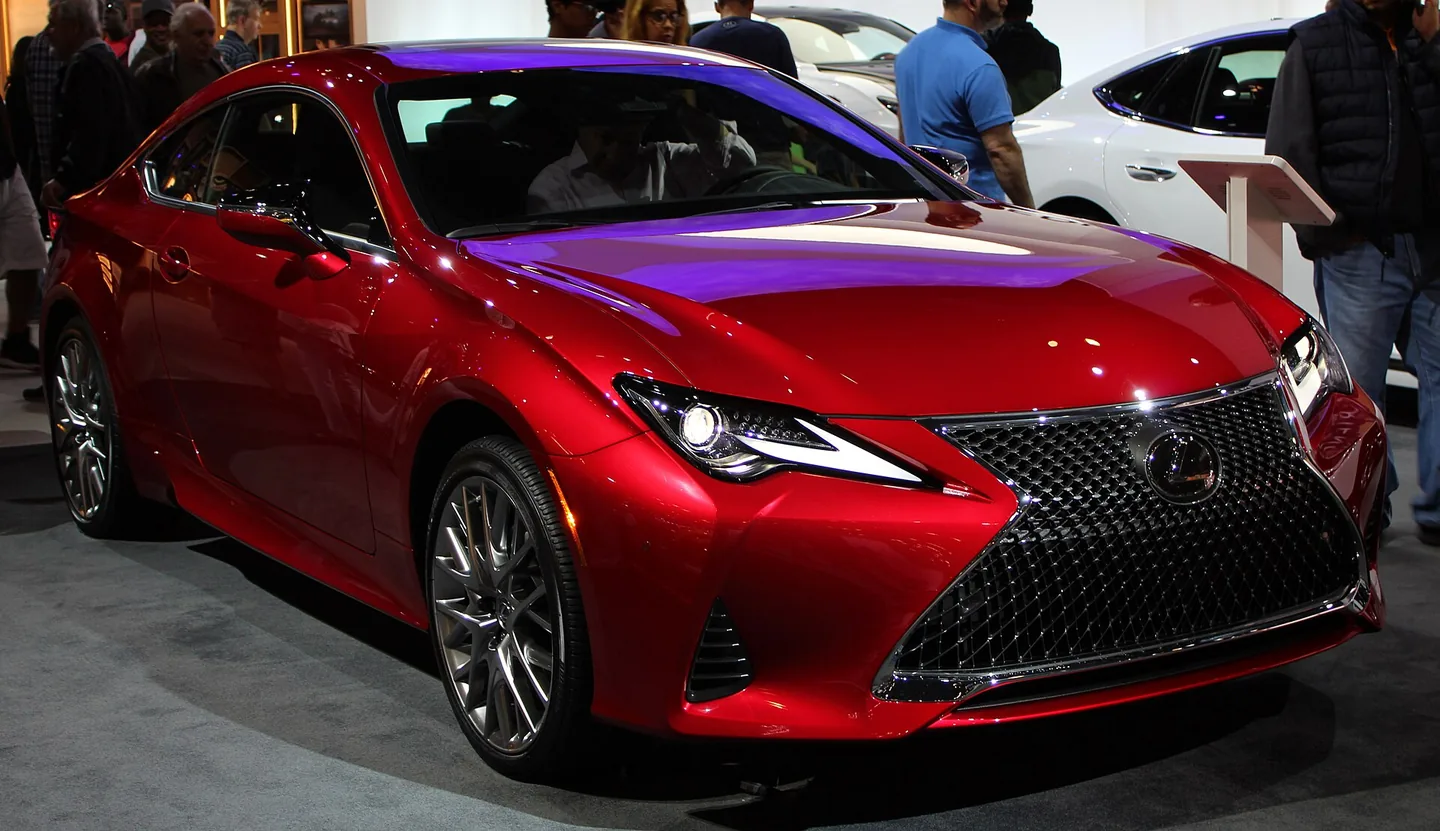
Lexus RC300 — what the federal data shows
2016–2017 · 1 federal complaints on file
Not enough complaints have been filed about this model to break them down by engine honestly — that needs at least 50 for a single engine. Everything we do have on it is below, from the same federal sources as every other page.
Ownership profile
Each axis is this model's percentile within its own segment — comparing a pickup's fuel economy against a compact car's would say nothing. Built from EPA test data.
Value for money
$42,690
Capability per relative dollar, ranked against the same segment. It divides this model's average percentile across the axes above by its price relative to the segment median — so 80 means it delivers more per dollar than 80% of its class.
Price source: CarAPI vehicle trim database — base-trim MSRP, median across 2016-2017 model years. Unlike every other figure on this page, the price does not come from a federal record. It is the manufacturer's list price for the cheapest trim — what people actually paid varies with incentives and options, so treat this one axis as indicative, not exact.
NHTSA crash-test ratings
Official 5-star ratings from standardized federal crash tests. Unlike the complaint figures above, these are directly comparable between models. Where a model year was tested in several versions, the lowest overall rating is shown.
0.0% rollover risk
| Model year | Overall | Frontal | Side | Rollover |
|---|---|---|---|---|
| 2016 | Not rated | Not rated | Not rated | Not rated |
| 2017 | Not rated | Not rated | Not rated | Not rated |
Source: NHTSA New Car Assessment Program.
Method, sources and limitations
How this was built
- Source: NHTSA public complaint database (api.nhtsa.gov), retrieved 2026-08-16. Every complaint carries the first 11 characters of the vehicle's VIN.
- Those partial VINs were decoded through NHTSA's vPIC service to identify the exact engine — 98.2% resolved successfully. This is how the data gets to engine level; model-level ratings cannot do this.
- Percentages are the share of component mentions, not of complaints. One complaint can name several components, so the figures describe what a given engine's complaints are about — they do not sum to a failure rate.
What this does not tell you
- This is not a reliability ranking. Complaint totals track how many were sold, not how often they fail. Nobody publishes per-engine sales volume, so comparing totals between engines would be misleading. Read each engine's own breakdown; don't race them against each other.
- Engines with fewer than 50 complaints are omitted — too small to say anything honest about.
- Complaints are self-reported by owners. They skew toward problems that are alarming or expensive, and toward vehicles under active recall attention.
Compare with
Or see the whole segment at once: Compact car →
Find one for sale
Opens Autotrader's used listings for this model. You can browse without giving any contact details; only contacting a seller requires them. We pass nothing about you to anyone.
Used Lexus RC300 listings on Autotrader →We never sell your information to dealers.